
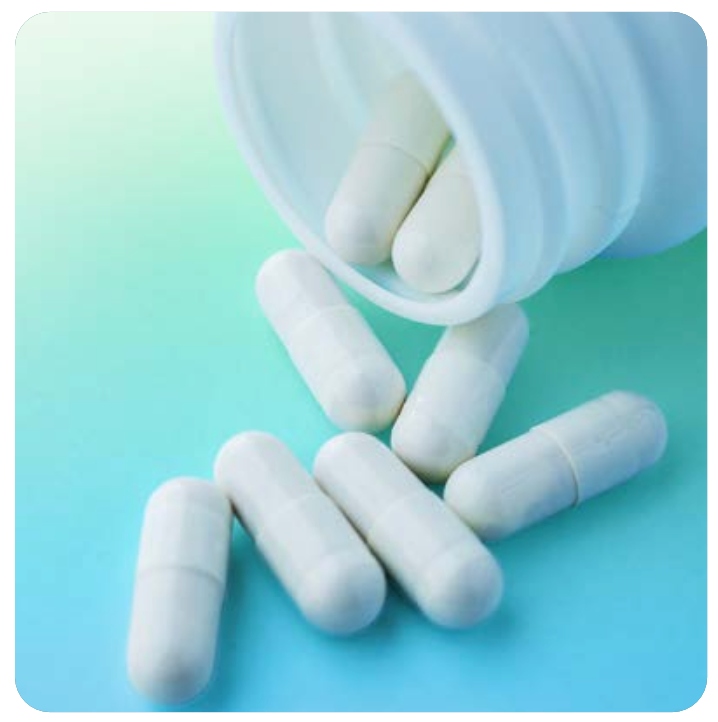
1-30mg up to 1/2 grain
1-30mg up to 1/2 grain is a prescriber-directed compounded preparation prepared or dispensed for patient-specific use within the Hormone Optimization therapy area. Genesis should dispense this medication only pursuant to a valid prescription and the prescriber's clinical judgment.
This preparation represents a compounded thyroid hormone formulation dosed in the range of 1–30 mg (up to one-half grain), containing levothyroxine (T4) and liothyronine (T3) in the established desiccated thyroid extract ratio of approximately 38 mcg T4 and 9 mcg T3 per 60 mg (1 grain). At this sub-grain strength, each capsule provides a low, initiating dose of thyroid hormone. Genesis Compounding prepares this as a prescription-only 503A preparation for individual patients under prescriber direction; it is not FDA-approved as a compounded preparation.
| Active Ingredient | Pharmacologic Role |
|---|---|
| Levothyroxine (T4) — proportional to strength ordered | Synthetic thyroxine (T4) is the primary storage thyroid hormone; it is converted peripherally to the active T3 and acts on nuclear thyroid hormone receptors to regulate metabolism, growth, and cardiovascular function. |
| Liothyronine (T3) — proportional to strength ordered | Active triiodothyronine (T3) directly binds thyroid hormone nuclear receptors, exerting approximately four-fold greater potency than T4 on a microgram-per-microgram basis, providing rapid thyromimetic activity. |
This preparation is administered orally, typically as a capsule or tablet taken on an empty stomach.
- Take 30–60 minutes before breakfast or as directed by the prescriber to maximize absorption.
- Swallow whole with water; do not crush or chew.
- Avoid taking within 4 hours of calcium supplements, iron, antacids, or cholestyramine, which can impair thyroid hormone absorption.
At this dosing range (1–30 mg, up to ½ grain), this preparation is typically used as a starting or low-dose initiation therapy. Dosing principles per established clinical standards:
- The usual starting dose for hypothyroidism is 15–30 mg/day, with incremental increases of 15 mg every 2–3 weeks as tolerated.
- In patients with long-standing myxedema or suspected cardiovascular disease, begin at the lower end of the range (15 mg/day) and titrate cautiously.
- Most maintenance doses fall between 60–120 mg/day; doses in this sub-30 mg range are initiation doses only.
- Final dosing is entirely prescriber-determined based on symptoms, TSH, free T4, and free T3 laboratory monitoring.
- Levothyroxine (T4): After absorption, T4 is converted to T3 primarily in the liver, kidney, and peripheral tissues by deiodinase enzymes. T3 then binds to nuclear thyroid hormone receptors (TRα and TRβ), forming receptor-DNA complexes that regulate transcription of genes governing basal metabolic rate, thermogenesis, cardiac output, and protein synthesis.
- Liothyronine (T3): Binds directly to thyroid hormone nuclear receptors with high affinity (approximately 4× greater than T4), producing rapid and potent thyromimetic effects without the need for peripheral conversion.
Compounded thyroid hormone preparations in the T4/T3 ratio are used for prescriber-directed management of:
- Hypothyroidism of any etiology (primary, secondary, or tertiary), including post-thyroidectomy and post-radioiodine states.
- Patients in whom levothyroxine monotherapy has not achieved full symptom resolution despite normalized TSH.
- TSH suppression in selected patients with thyroid nodules or thyroid cancer (at higher doses; not applicable at this sub-grain range).
Monitoring recommendations:
- Measure serum TSH, free T4, and free T3 at baseline and 4–6 weeks after each dose adjustment.
- Avoid supratherapeutic dosing: elevated T3 is associated with atrial fibrillation, bone loss (with prolonged suppressed TSH), and cardiovascular stress.
- Cardiac assessment is recommended before initiating therapy in elderly patients or those with suspected coronary artery disease.
- Note: FDA has indicated that desiccated thyroid extract from animal glands is not eligible for compounding as of 2025–2026 guidance; prescribers should verify the current compounding regulatory status. Compounded T4/T3 using pharmaceutical-grade active pharmaceutical ingredients (APIs) remains a distinct option.
Contraindications:
- Uncorrected adrenal insufficiency (thyroid hormone increases cortisol clearance and may precipitate adrenal crisis).
- Untreated thyrotoxicosis.
- Acute myocardial infarction (use with extreme caution).
- Hypersensitivity to any component.
Warnings & Precautions:
- Cardiovascular: initiate at low doses in elderly patients or those with cardiac disease; angina may be exacerbated.
- Diabetes: thyroid hormone replacement may alter insulin or oral hypoglycemic requirements; monitor glucose closely.
- Osteoporosis risk with long-term TSH suppression, particularly in postmenopausal women.
- Biotin supplementation may cause falsely abnormal thyroid function tests; instruct patients to hold biotin ≥48 hours before lab draws.
Drug Interactions:
- Oral anticoagulants (warfarin): thyroid hormones potentiate anticoagulant effect; monitor INR closely.
- Calcium, iron, antacids, cholestyramine, sucralfate: impair absorption; separate by ≥4 hours.
- CYP enzyme inducers (phenytoin, carbamazepine, rifampin): may increase T4/T3 metabolism, requiring dose increases.
Common Side Effects: At supratherapeutic doses — palpitations, tachycardia, tremor, excessive sweating, heat intolerance, weight loss, diarrhea, insomnia, anxiety. At therapeutic doses, side effects are rare.
Store at controlled room temperature (15–25°C / 59–77°F). Protect from heat, light, and moisture. Keep in original container with lid tightly closed. Do not store in the bathroom or kitchen where humidity is high. Keep out of reach of children. Use by the beyond-use date labeled by Genesis Compounding per USP <795> standards. Discard any unused portion after the BUD.
Why is my starting dose so low?
Low starting doses (under ½ grain / 30 mg) are standard practice, particularly in elderly patients or those with cardiovascular concerns, to allow the body to gradually adapt to thyroid hormone replacement and minimize cardiac side effects. Your prescriber will titrate your dose based on labs and symptoms.
When should I take this medication?
Take it 30–60 minutes before breakfast on an empty stomach. Avoid taking it with calcium, iron, or antacids, as these significantly reduce absorption.
What laboratory tests will be monitored?
Your prescriber will check TSH, free T4, and free T3 approximately 4–6 weeks after starting or changing your dose. Remember to hold biotin supplements for at least 48 hours before any thyroid blood draw.
Is this the same as Armour Thyroid?
Compounded T4/T3 preparations use pharmaceutical-grade active ingredients formulated to provide T4 and T3 in a clinically established ratio. They are distinct from commercially manufactured desiccated thyroid products and are not FDA-approved as compounded preparations.
What are signs of too much thyroid hormone?
Symptoms of excess include palpitations, rapid heartbeat, tremor, excessive sweating, heat intolerance, unintended weight loss, and insomnia. Contact your prescriber promptly if these occur.
Clinical References
Authoritative sources reviewed in preparing this clinical summary. Provided for prescriber reference; not a substitute for the prescriber’s clinical judgment.
Partner with Genesis Compounding
Join a PCAB-accredited 503A compounding pharmacy licensed in all 50 states. Complete onboarding in minutes and start prescribing personalized, compliant formulations for your patients.