
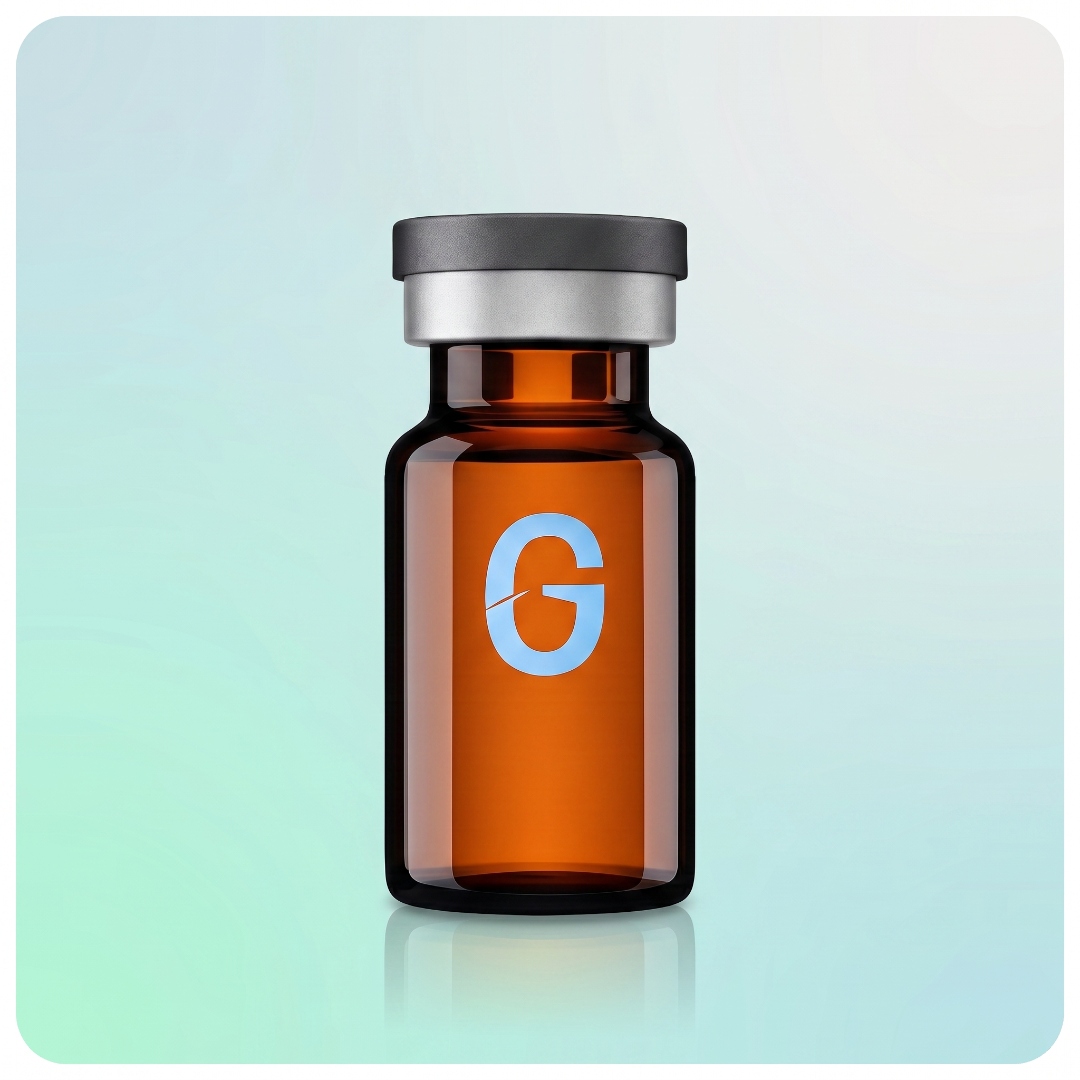
GLP-1 Semaglutide 40mg (20mg/1mL)
GLP-1 Semaglutide 40mg (20mg/1mL) is a prescriber-directed weight-management medication option. It should be used as part of a broader care plan that includes nutrition, activity, contraindication screening, and monitoring.
GLP-1 Semaglutide 40 mg (20 mg/1 mL) is a compounded subcutaneous injectable preparation of semaglutide at a higher concentration of 20 mg/mL, with a total of 40 mg semaglutide per vial. The increased concentration (20 mg/mL vs. 10 mg/mL) allows prescribers to achieve higher weekly doses with smaller injection volumes, which may improve patient comfort at maintenance doses. Semaglutide is a GLP-1 receptor agonist with 94% structural homology to human GLP-1, modified for albumin binding and DPP-4 resistance to enable once-weekly subcutaneous dosing. Genesis Compounding prepares this as a prescription-only, patient-specific 503A compounded sterile preparation, not FDA-approved as a compounded product.
| Active Ingredient | Pharmacologic Role |
|---|---|
| Semaglutide 20 mg/mL | High-concentration long-acting GLP-1 receptor agonist enabling smaller-volume weekly injections at maintenance doses; activates GLP-1 receptors to enhance glucose-dependent insulin secretion, suppress glucagon, slow gastric emptying, and modulate hypothalamic appetite and satiety centers. |
Route: Subcutaneous (SC) injection, once weekly.
Draw the prescriber-specified volume using a precision syringe (note: at 20 mg/mL, doses are half the volume compared to 10 mg/mL formulations — careful volume calculation is essential). Administer subcutaneously into the abdomen, outer thigh, or upper arm. Rotate injection sites within the same body region weekly. Do not inject intravenously or intramuscularly. Do not mix with other medications in the same syringe. Verify the prescribed dose volume with the prescriber before each injection if any uncertainty exists.
All dosing is prescriber-determined. Due to the higher concentration (20 mg/mL), prescribers and patients must be attentive to dose volumes to avoid administration errors. Example dose-volume relationships at this concentration:
- 0.25 mg dose = 0.0125 mL — requires precision insulin-type syringe
- 1 mg dose = 0.05 mL
- 2.4 mg dose (Wegovy® equivalent maintenance) = 0.12 mL
Standard titration (per FDA-approved product precedent):
- Starting: 0.25 mg SC once weekly × 4 weeks.
- Escalation: Increase by 0.25–0.5 mg every 4 weeks as tolerated.
- Maintenance: Prescriber-directed target dose, typically 0.5–2.4 mg weekly.
- Do not escalate through significant GI adverse events; hold and reassess with the prescriber.
- Semaglutide: Binds and activates GLP-1R (Gs-coupled GPCR), increasing intracellular cAMP. Pancreatic β-cell activation: glucose-dependent insulin secretion (minimizing hypoglycemia risk), β-cell proliferation, and α-cell glucagon suppression. Gastrointestinal: delayed gastric emptying and reduced postprandial glucose excursions. Hypothalamic: appetite suppression and enhanced satiety via arcuate nucleus GLP-1R signaling, reducing caloric intake. The albumin-binding fatty diacid side chain and DPP-4-resistant Aib substitution at position 8 confer the ~7-day plasma half-life supporting once-weekly dosing. The mechanism of action is identical across vial concentrations; only the dose volume per weekly injection differs.
Clinical Context: The 40 mg/2 mL vial at 20 mg/mL concentration is formulated for patients who are in the maintenance phase of semaglutide therapy and benefit from higher-concentration dosing to reduce weekly injection volume. Clinical indications include type 2 diabetes management and chronic weight management, consistent with the evidence base supporting all semaglutide formulations.
Important Volume-Related Safety Note: The higher concentration (20 mg/mL) carries an increased risk of dosing errors if volume is confused with a 10 mg/mL preparation. Prescribers should explicitly indicate the concentration on the prescription and instruct patients carefully on volume calculation. Consider providing pre-calculated dose volume tables for each titration step.
Monitoring Considerations: Identical to all semaglutide preparations — HbA1c, fasting glucose, body weight, renal function, thyroid evaluation, retinal assessment in patients with diabetic retinopathy, and GI symptom monitoring during titration.
Contraindications:
- Personal or family history of medullary thyroid carcinoma (MTC) or multiple endocrine neoplasia type 2 (MEN2).
- Type 1 diabetes mellitus.
- Known hypersensitivity to semaglutide or any excipient.
Warnings & Precautions:
- Black Box Warning — Thyroid C-cell tumors: Dose-dependent thyroid C-cell tumors in rodents; human risk unknown. Contraindicated in MTC/MEN2 history.
- Dosing error risk: The 20 mg/mL concentration requires careful volume calculation; doses are half the volume of 10 mg/mL preparations for the same mg dose. Ensure patients understand volume-to-dose conversion before initiating.
- Pancreatitis, gallbladder disease, acute kidney injury, diabetic retinopathy worsening, and suicidal ideation — same as all semaglutide preparations.
- Rebound weight gain upon discontinuation.
Drug Interactions:
- Insulin and sulfonylureas: increased hypoglycemia risk.
- Narrow therapeutic index oral drugs: delayed gastric emptying effect.
- Other GLP-1 agonists or tirzepatide: contraindicated in combination.
- Corticosteroids, thiazide diuretics: may attenuate glycemic benefit.
Common Side Effects: Nausea, vomiting, diarrhea, constipation, decreased appetite, abdominal pain, dysgeusia, fatigue, headache, alopecia. Injection-site reactions. GI events predominate during escalation.
Store at 2–8°C (36–46°F) under refrigeration. Protect from light; keep in carton between uses. Do not freeze. Maintain aseptic technique at each vial access. Use within the beyond-use date (BUD) assigned by Genesis Compounding. Allow to approach room temperature briefly before injection for comfort. Discard if solution appears cloudy, discolored, or contains particles.
Why is this vial labeled 20 mg/mL when other semaglutide vials are 10 mg/mL?
This higher concentration formulation allows the same weekly dose to be delivered in a smaller injection volume, which many patients find more comfortable. However, the volume you draw will be exactly half of what you would draw from a 10 mg/mL vial for the same mg dose. Your prescriber will specify the exact volume to inject each week — always confirm this before injecting.
What happens if I accidentally inject the wrong volume?
Contact your prescriber immediately if you believe you have injected significantly more or less than the prescribed dose. Excessive semaglutide may cause severe nausea, vomiting, hypoglycemia (especially with concomitant insulin or sulfonylureas), and dehydration. Underdosing may reduce therapeutic efficacy.
Is this the right vial for me if I am just starting semaglutide?
The higher-concentration vial is generally better suited for patients already established on semaglutide who are at or approaching maintenance doses, where smaller injection volumes are advantageous. For early titration phases involving very small doses (e.g., 0.25 mg), the volume calculation at 20 mg/mL requires precision syringes; your prescriber will guide which vial format is most appropriate for your current dose stage.
How do I store this safely?
Refrigerate at 2–8°C. Do not freeze. Protect from light. Inspect before each use. Use before the beyond-use date on the Genesis Compounding label.
Is this the same drug as Wegovy® or Ozempic®?
The active ingredient is the same — semaglutide. However, this is a 503A compounded preparation prepared by Genesis Compounding per individual patient prescription. It is not an FDA-approved product and has not undergone the FDA drug approval process.
Clinical References
Authoritative sources reviewed in preparing this clinical summary. Provided for prescriber reference; not a substitute for the prescriber’s clinical judgment.
Partner with Genesis Compounding
Join a PCAB-accredited 503A compounding pharmacy licensed in all 50 states. Complete onboarding in minutes and start prescribing personalized, compliant formulations for your patients.