
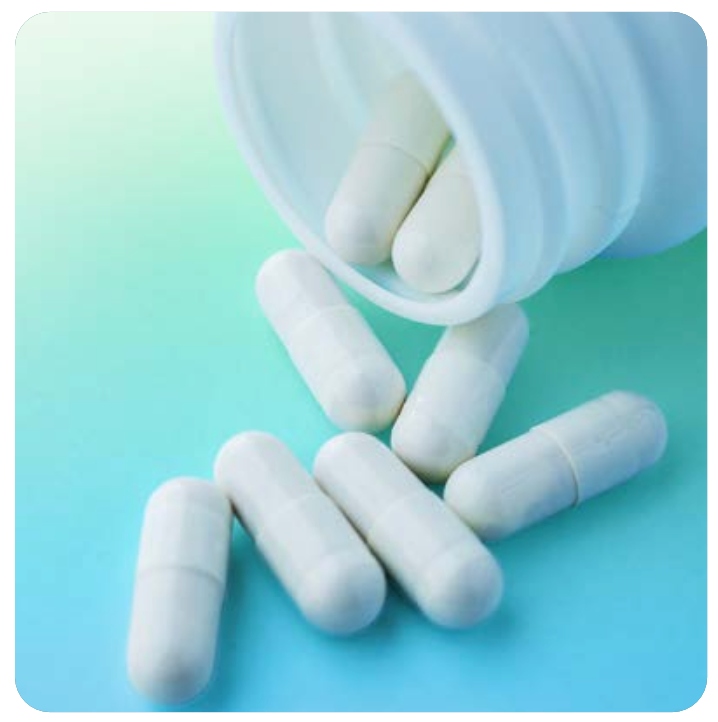
Minoxidil Capsules (0.1mg | 0.25mg | 0.5mg | 0.75mg | 1mg)
Minoxidil Capsules (0.1mg | 0.25mg | 0.5mg | 0.75mg | 1mg) is a hair or scalp-focused product used in prescriber-directed hair health protocols. Route and duration should be matched to diagnosis, sex, pregnancy status, and tolerability.
Low-dose oral minoxidil capsules are compounded in a range of strengths (0.1 mg, 0.25 mg, 0.5 mg, 0.75 mg, and 1 mg) to enable careful, individualized titration for the off-label treatment of patterned hair loss and other alopecias. Oral minoxidil at these sub-hypertensive doses exploits the drug's intrinsic hair-follicle stimulating properties — originally observed as a side effect at antihypertensive doses — while minimizing systemic cardiovascular and fluid retention effects. Genesis Compounding prepares these as prescription-only, patient-specific 503A compounded preparations; oral minoxidil is not FDA-approved for hair loss at these doses.
| Active Ingredient | Pharmacologic Role |
|---|---|
| Minoxidil — per capsule strength ordered | Vasodilator, KATP channel opener, and Wnt/β-catenin signaling activator; extends the anagen (growth) phase of hair follicles and increases follicular caliber when administered systemically at low doses, overcoming limitations of topical absorption variability. |
Oral capsule: Swallow intact with water, with or without food. Administered once daily; some protocols use twice-daily dosing in women. Lower doses (0.1–0.25 mg) are typically initiated for female-pattern hair loss (FPHL) or as a trial dose; higher doses (0.5–1 mg) may be titrated upward based on response and tolerability. Oral administration bypasses the follicular sulfotransferase dependency that limits topical minoxidil efficacy in some individuals — an important advantage in patients who are topical non-responders.
All dosing is prescriber-determined based on sex, pattern of hair loss, cardiovascular baseline, and individual response.
- Female-pattern hair loss (FPHL): Published data support 0.25–1.25 mg/day; typical starting doses of 0.25–0.5 mg/day with upward titration based on response and tolerability.
- Male-pattern hair loss (MPHL): Effective doses typically 2.5–5 mg/day; the lower compounded strengths (0.5–1 mg) may be used as starting doses before titration to higher commercially available strengths.
- Initial clinical response is typically observed at 3 months; maximum benefit at 6–12 months of consistent use.
- Therapy is generally long-term — cessation results in reversal of gains within 6–12 months.
- Oral Minoxidil: Absorbed from the GI tract and distributed systemically, minoxidil (as its active sulfate metabolite) opens KATP channels in dermal papilla cells of hair follicles throughout the body. This stimulates Wnt/β-catenin signaling (a key anagen-promoting pathway), increases VEGF production in the follicular papilla, and prolongs the anagen phase while shortening the telogen phase. Oral delivery bypasses inter-individual variation in follicular sulfotransferase (SULT1A1) activity — a key enzyme required to convert topical minoxidil to its active form in the scalp — making it effective in topical non-responders. At low doses (<5 mg/day), significant antihypertensive effects are generally not observed in normotensive patients, though blood pressure and heart rate monitoring is still recommended.
Primary off-label indications: Male-pattern and female-pattern androgenetic alopecia; chronic telogen effluvium; traction alopecia; loose anagen syndrome; alopecia areata; chemotherapy-induced alopecia. Oral minoxidil is particularly valuable for patients who are unable to tolerate topical minoxidil (scalp irritation, product residue), have suboptimal topical response (suspected low SULT1A1 activity), or prefer the convenience of a single daily oral dose.
Prescriber monitoring:
- Baseline blood pressure, heart rate, and ECG — particularly relevant in patients with cardiovascular disease or at cardiac doses
- Blood pressure and heart rate monitoring at follow-up visits, especially during titration
- Baseline BMP to assess renal and electrolyte status in patients at risk for fluid retention
- Urinary catecholamines at baseline to rule out pheochromocytoma (relative contraindication)
- Scalp photography at baseline and 6–12 months
Contraindications:
- Pheochromocytoma (minoxidil may trigger tachycardia and hypertension via catecholamine release)
- Previous hypersensitivity to minoxidil
- Pregnancy: risk-benefit consideration — minoxidil has limited safety data; generally avoid unless no alternative exists
- Significant pre-existing hypotension, pulmonary hypertension, or cardiac disease — relative contraindications requiring careful prescriber assessment
Warnings & Precautions:
- Fluid retention/edema: the most clinically significant side effect at low doses; may cause lower extremity swelling, particularly at doses ≥2.5 mg
- Hypertrichosis: unwanted hair growth on the face, extremities, and body — dose-dependent and reversible on discontinuation; the most common cosmetic complaint, especially in women
- Tachycardia and T-wave ECG changes reported at low doses
Drug Interactions:
- Antihypertensives: additive hypotensive effects
- NSAIDs: may reduce minoxidil's antihypertensive effect and potentiate sodium retention
- Spironolactone: often co-prescribed in women to counteract minoxidil-associated sodium/fluid retention
Common Side Effects: Hypertrichosis (facial/body hair growth), lower extremity edema, headache, dizziness, postural hypotension, tachycardia, and nausea. Most side effects are dose-dependent and reversible.
Store compounded minoxidil capsules at room temperature (20–25°C), away from moisture, heat, and light. Keep tightly sealed in the dispensing container. Do not store in bathroom medicine cabinets (heat and humidity). Observe the beyond-use date assigned by Genesis Compounding and discard expired medication appropriately.
Why use low-dose oral minoxidil instead of the topical solution?
Oral minoxidil bypasses the need for follicular sulfotransferase (SULT1A1) activity for conversion to the active form, making it effective in the estimated 30–40% of patients who are topical non-responders due to low scalp enzyme activity. It also avoids scalp product buildup, cosmetic concerns, and contact-dermatitis risk associated with topical vehicles.
Will I grow hair in places I don't want?
Hypertrichosis — fine hair growth on the face, arms, and body — is the most common side effect of oral minoxidil, occurring in roughly 50–80% of users to varying degrees. It is dose-dependent and fully reversible on discontinuation. Laser hair removal can manage this while maintaining scalp therapy.
Is oral minoxidil safe for the heart?
At the low doses used for hair loss (0.25–5 mg/day), serious cardiovascular events are uncommon in otherwise healthy individuals. However, fluid retention, mild tachycardia, and ECG T-wave changes have been reported. Patients with known cardiac disease require more careful evaluation before prescribing.
How long before I see results?
Initial shedding reduction and early regrowth may appear at 3 months. Cosmetically visible improvement typically requires 6–12 months of consistent daily use. Results are maintained only with ongoing treatment.
Is this FDA-approved for hair loss?
Oral minoxidil is FDA-approved only for hypertension (40–100 mg/day dosing). Low-dose oral minoxidil for hair loss is an off-label use. These compounded capsules are prescriber-directed, patient-specific 503A preparations not evaluated by the FDA as compounded products for hair loss.
Clinical References
Authoritative sources reviewed in preparing this clinical summary. Provided for prescriber reference; not a substitute for the prescriber’s clinical judgment.
Partner with Genesis Compounding
Join a PCAB-accredited 503A compounding pharmacy licensed in all 50 states. Complete onboarding in minutes and start prescribing personalized, compliant formulations for your patients.