
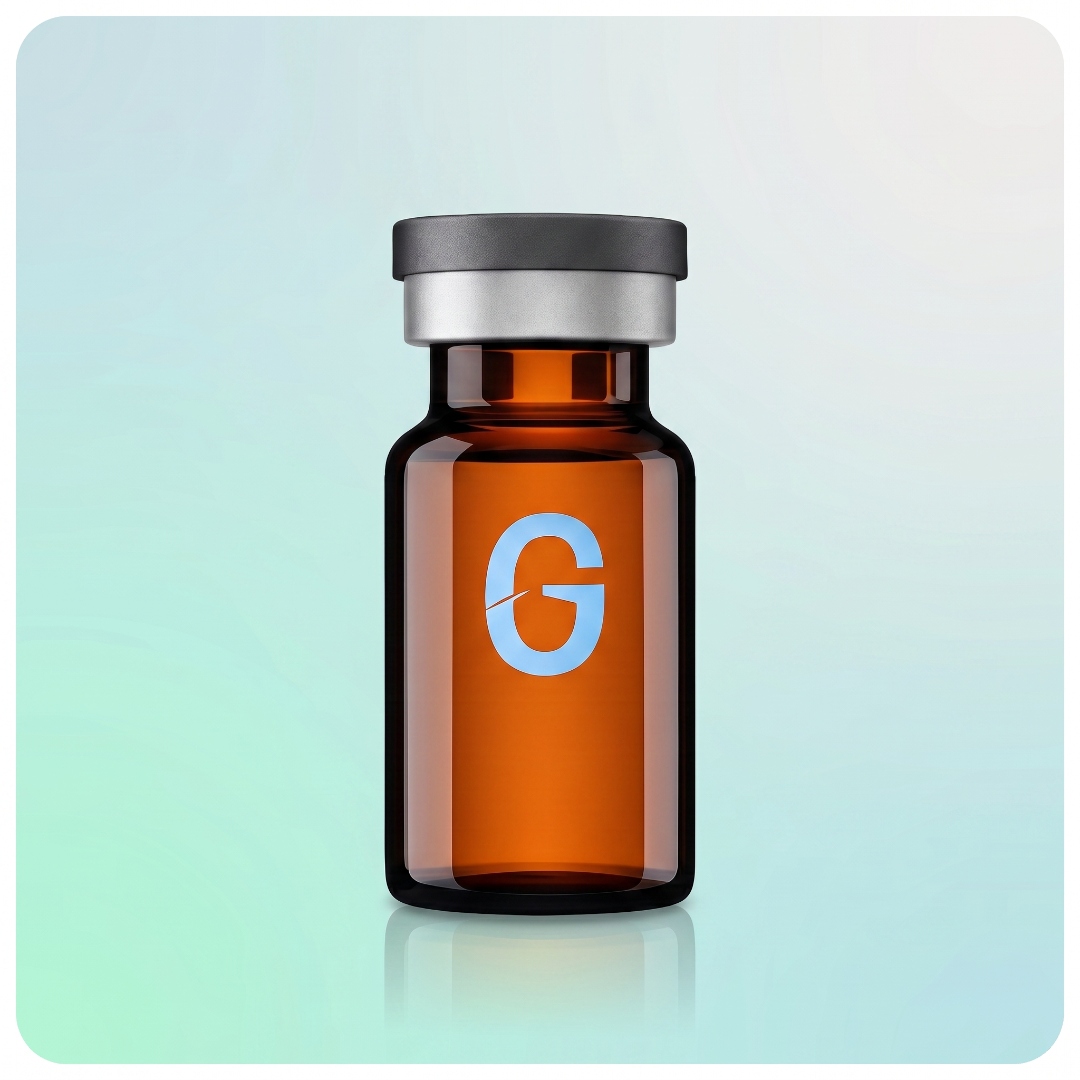
NAD+ 1000mg – 100mg/mL
NAD+ 1000mg – 100mg/mL is used in prescriber-directed longevity, peptide, antioxidant, or skin-longevity protocols. Published evidence varies substantially by ingredient, so the page avoids unsupported disease-treatment claims.
NAD⁺ 1000 mg at a concentration of 100 mg/mL is a high-dose intravenous compounded infusion formulation of nicotinamide adenine dinucleotide. At this concentration, 10 mL of solution delivers the full 1000 mg dose, typically administered by slow IV infusion over 1–3 hours or longer per prescriber protocol. This high-dose infusion is prescribed for patients in whom intensive NAD⁺ repletion is the clinical goal — such as substance use recovery support, significant metabolic dysfunction, or post-illness recovery. Genesis Compounding prepares this as a prescriber-directed, patient-specific 503A compounded preparation; it is not FDA-approved.
| Active Ingredient | Pharmacologic Role |
|---|---|
| NAD⁺ 1000 mg (100 mg/mL) | Endogenous redox coenzyme; at high-dose IV levels, robustly replenishes intracellular NAD⁺ pools to restore sirtuin activity, PARP-mediated DNA repair, and mitochondrial electron transport capacity — and reduces neurotransmitter-related craving signals in substance use recovery contexts. |
Intravenous infusion: Administered via peripheral IV line diluted in compatible IV fluid (typically normal saline or D5W) per pharmacy labeling. Infuse slowly — 1000 mg doses typically require 2–4 hours of controlled infusion to minimize rate-related adverse effects (flushing, nausea, chest discomfort, muscle cramping). Reduce infusion rate if any discomfort arises; do not attempt to administer as a rapid IV push. The patient should be in a comfortable reclined position during infusion and monitored throughout by qualified clinical personnel.
All dosing is prescriber-determined. The 1000 mg dose represents a high-dose protocol.
- Substance use recovery intensive protocols: daily infusions over multi-day courses (e.g., 4–10 consecutive days) — prescriber-directed.
- Metabolic restoration and wellness protocols: weekly or bi-weekly infusions of 500–1000 mg.
- Rate of infusion: typically 100–200 mg/hour to maintain patient comfort.
Identical to the general NAD⁺ entry: NAD⁺ serves as an electron carrier and cosubstrate for sirtuins, PARPs, CD38, and SARM1. At high-dose IV infusion, it rapidly replenishes depleted intracellular NAD⁺ pools, restoring sirtuin-mediated metabolic regulation, enhancing DNA repair, and supporting mitochondrial function. In substance use recovery, high-dose NAD⁺ infusion is hypothesized to restore neurotransmitter balance and reduce withdrawal severity and craving, though this mechanism is not fully elucidated and clinical evidence is preliminary.
See general NAD⁺ entry (ID 154). High-dose 1000 mg protocols are most commonly associated with intensive substance use recovery support, post-COVID fatigue, and significant age-related or illness-related metabolic depletion. Prescribers should document the specific clinical indication and rationale for high-dose selection.
See general NAD⁺ entry (ID 154). At 1000 mg, infusion-related symptoms (flushing, nausea, chest tightness, muscle cramping) are more pronounced — these are dose and rate-dependent and are managed by slowing infusion rate. Clinical personnel must be present and prepared to manage these reactions. Monitor blood pressure and heart rate during infusion.
Contraindications:
- Hypersensitivity to NAD⁺ or nicotinamide components
- Active malignancy (theoretical concern — discuss with prescriber)
Common Side Effects: Flushing, nausea, chest tightness, muscle cramping, headache — all rate-dependent and reversible.
Refrigerate at 2–8°C, protected from light. Do not freeze. Prepare and use within the beyond-use date assigned by Genesis Compounding. Discard unused portion. Do not store compounded NAD⁺ solutions at room temperature for extended periods — stability is limited outside of refrigeration.
Why is this a 1000 mg dose?
Higher NAD⁺ doses are used in clinical protocols where aggressive cellular repletion is the goal — such as intensive substance use recovery programs or significant age-related metabolic depletion. The prescriber has selected this dose based on your specific clinical profile and needs.
How long does the infusion take?
At 100 mg/mL concentration, a 1000 mg dose is contained in 10 mL of solution, which is diluted into a larger IV bag and infused slowly over 2–4 hours to minimize discomfort. Never administer as a rapid bolus.
What should I do if I feel chest tightness or nausea during the infusion?
These are rate-dependent reactions — immediately notify the infusion nurse or clinical staff. Slowing the infusion rate typically resolves symptoms within minutes. These are not allergic reactions, but they are uncomfortable and should be communicated promptly.
Is this FDA-approved?
No. Intravenous NAD⁺ preparations are not FDA-approved. This is a prescriber-directed, patient-specific 503A compounded preparation prepared by Genesis Compounding.
Clinical References
Authoritative sources reviewed in preparing this clinical summary. Provided for prescriber reference; not a substitute for the prescriber’s clinical judgment.
Partner with Genesis Compounding
Join a PCAB-accredited 503A compounding pharmacy licensed in all 50 states. Complete onboarding in minutes and start prescribing personalized, compliant formulations for your patients.