
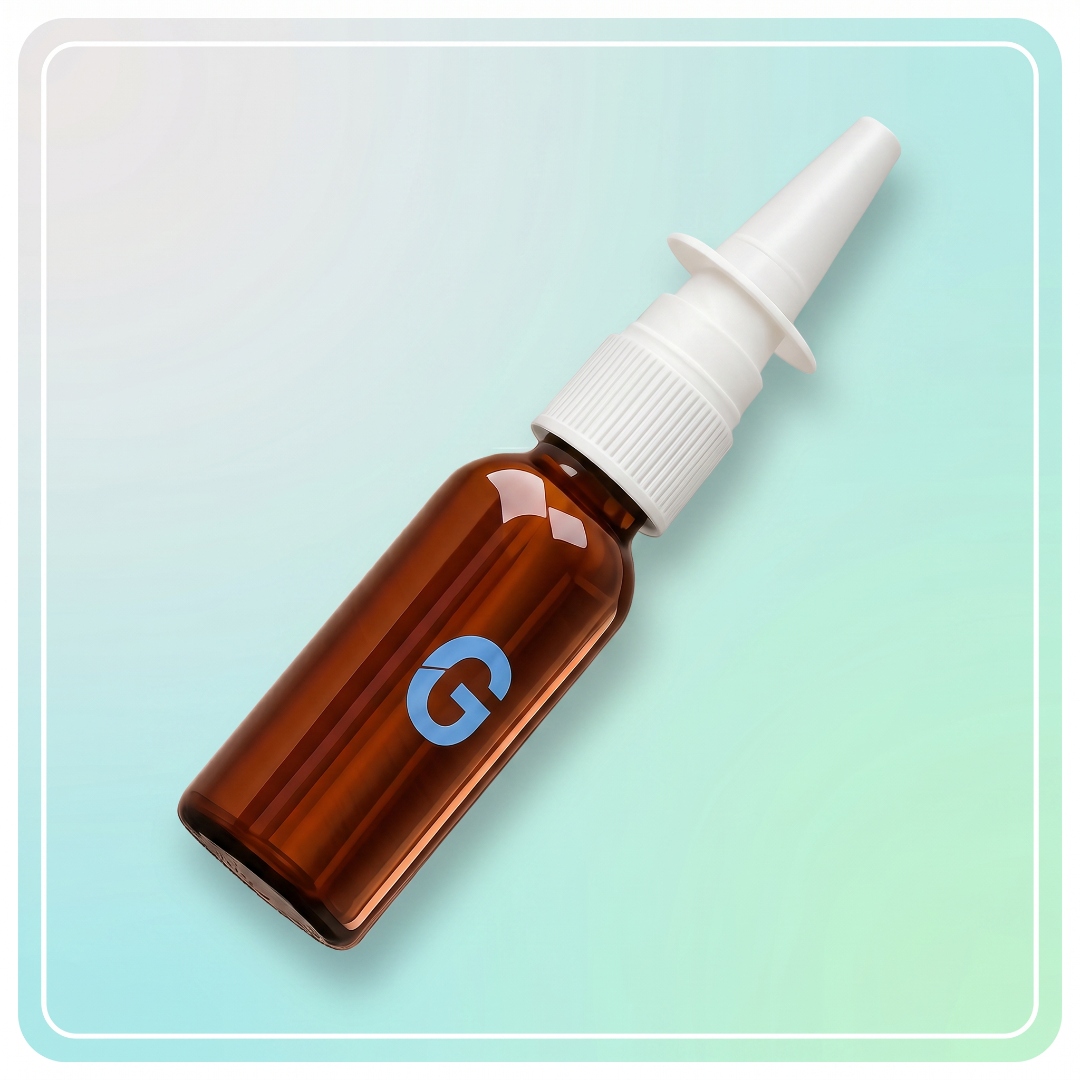
NAD+ 10mg/spray
NAD+ 10mg/spray is used in prescriber-directed longevity, peptide, antioxidant, or skin-longevity protocols. Published evidence varies substantially by ingredient, so the page avoids unsupported disease-treatment claims.
NAD⁺ 10 mg per actuation is a compounded intranasal spray formulation of nicotinamide adenine dinucleotide designed for self-administered, non-invasive delivery of NAD⁺ across the nasal mucosa. The intranasal route offers potential for direct nose-to-brain transport via olfactory pathways and systemic absorption through the nasal vasculature, providing a convenient maintenance delivery modality between IV infusion sessions or as a standalone prescriber-directed protocol. Genesis Compounding prepares this as a prescription-only, patient-specific 503A compounded preparation; intranasal NAD⁺ is not FDA-approved.
| Active Ingredient | Pharmacologic Role |
|---|---|
| NAD⁺ 10 mg per spray actuation | Endogenous redox coenzyme; delivered intranasally to support systemic and potential CNS NAD⁺ repletion, maintaining sirtuin activity, mitochondrial function, and DNA repair capacity as a maintenance regimen. |
Intranasal spray: Prime the pump before first use per label instructions. Insert the nasal tip into one nostril, occlude the opposite nostril, and actuate the pump while inhaling gently. Alternate nostrils with each dose. Avoid blowing the nose for at least 5–10 minutes after administration. Administer the number of sprays and at the frequency prescribed. NAD⁺ in intranasal solution may have variable bioavailability compared to IV; the prescriber selects this route based on patient suitability, convenience, and the maintenance goals of the treatment plan.
Dosing frequency and number of sprays per administration are prescriber-determined.
- Common prescriber protocols: 1–2 sprays (10–20 mg) per nostril, once or twice daily as a maintenance regimen.
- Intranasal dosing is typically used for maintenance between IV sessions or as a standalone approach for patients who decline or are unable to receive IV infusions.
See general NAD⁺ entry (ID 154). Intranasally delivered NAD⁺ is absorbed through nasal mucosal vasculature into the systemic circulation, and potentially via olfactory nerve pathways directly to the CNS — the latter route potentially providing targeted brain NAD⁺ repletion relevant to neurological applications. Bioavailability via the intranasal route is not well characterized for NAD⁺ compared to IV, but the clinical rationale supports its use as a maintenance delivery method.
Prescribed as a maintenance supplement between IV NAD⁺ sessions, or as a standalone daily regimen for patients targeting: cognitive maintenance, age-related NAD⁺ decline, fatigue management, or neuroprotective support in the context of neurodegenerative disease (investigational). All applications are off-label and investigational.
Contraindications:
- Hypersensitivity to NAD⁺ or formulation excipients
- Active nasal septum disorders, recent nasal surgery, or severe nasal obstruction — may affect delivery and absorption
Warnings & Precautions:
- Nasal irritation or congestion may occur with chronic intranasal administration
- Efficacy and bioavailability data for intranasal NAD⁺ in humans are very limited — clinical use is based on mechanistic rationale and prescriber judgment
Common Side Effects: Nasal irritation, mild burning or stinging on administration, transient nasal congestion; systemic NAD⁺ infusion-type reactions are unlikely at these small doses.
Store the nasal spray at room temperature (15–25°C) or as specified on the label, away from heat and light. Do not freeze. Keep the nasal tip clean and replace the cap after each use. Observe the beyond-use date assigned by Genesis Compounding. Once opened, use within the timeframe specified by the pharmacy.
Is intranasal NAD⁺ as effective as IV infusion?
The bioavailability of intranasal NAD⁺ is expected to be lower and less predictable than IV infusion due to variable nasal absorption and first-pass nasal metabolism. Prescribers often recommend intranasal NAD⁺ as a convenient maintenance strategy between IV sessions rather than as a full replacement for high-dose infusion protocols.
How many sprays do I use?
Follow your prescriber's specific instructions for number of sprays per nostril and frequency. Typical protocols range from 1–2 sprays per nostril once or twice daily, but your individualized prescription may differ.
Why use the nose instead of IV?
Intranasal delivery is non-invasive, self-administered, and convenient for daily maintenance dosing. The olfactory pathway from the nasal mucosa to the brain may also allow direct CNS delivery — potentially advantageous for neurological applications. It avoids the need for IV access and clinical supervision for each dose.
Is this FDA-approved?
No. Intranasal NAD⁺ is not FDA-approved. This is a prescriber-directed, patient-specific 503A compounded preparation by Genesis Compounding.
Clinical References
Authoritative sources reviewed in preparing this clinical summary. Provided for prescriber reference; not a substitute for the prescriber’s clinical judgment.
Partner with Genesis Compounding
Join a PCAB-accredited 503A compounding pharmacy licensed in all 50 states. Complete onboarding in minutes and start prescribing personalized, compliant formulations for your patients.