
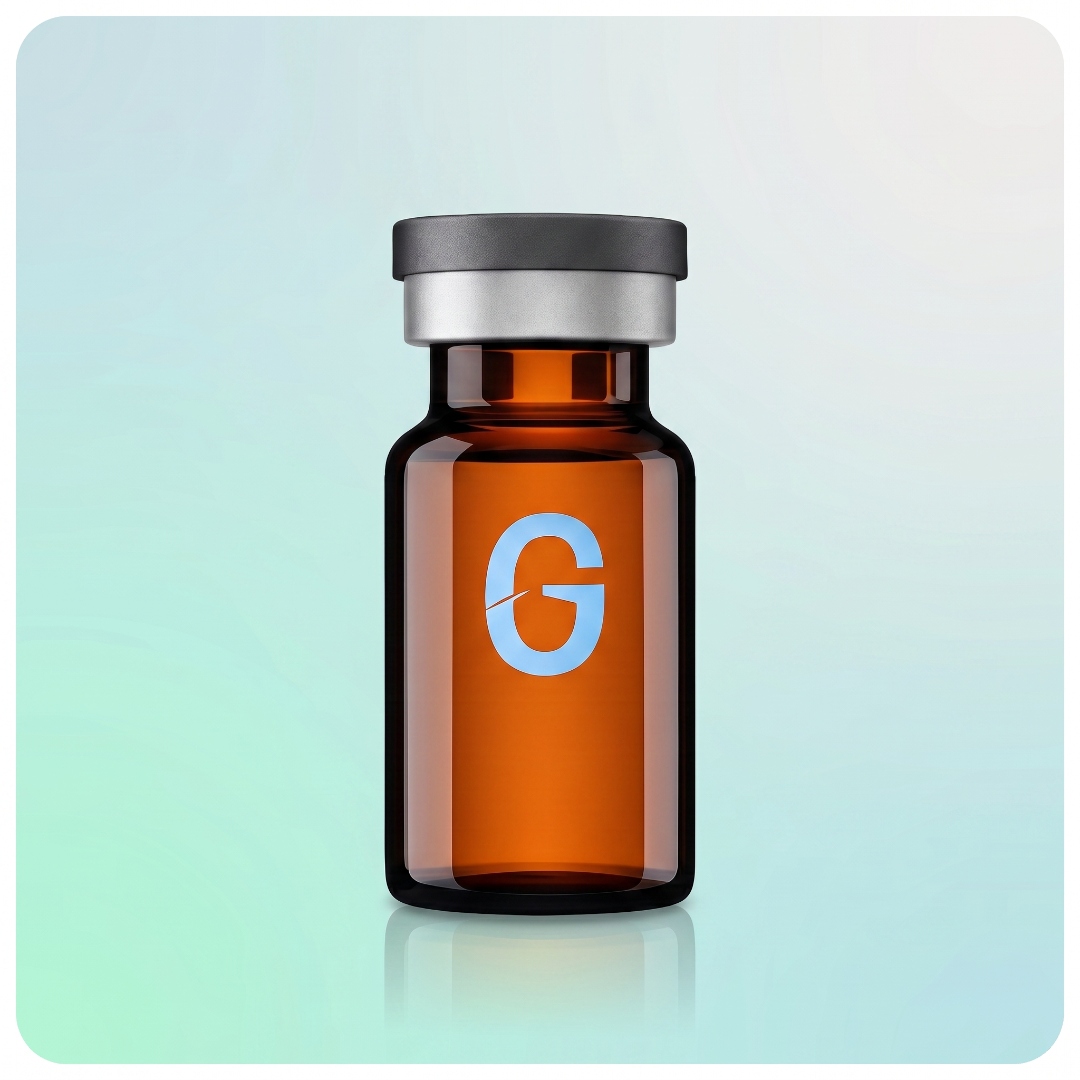
NAD+ 1200mg – 200mg/mL
NAD+ 1200mg – 200mg/mL is used in prescriber-directed longevity, peptide, antioxidant, or skin-longevity protocols. Published evidence varies substantially by ingredient, so the page avoids unsupported disease-treatment claims.
NAD⁺ 1200 mg at a concentration of 200 mg/mL is an ultra-high-dose, concentrated intravenous compounded infusion formulation of nicotinamide adenine dinucleotide. The 200 mg/mL concentration reduces the infusion volume to 6 mL for the full 1200 mg dose, requiring further dilution in IV fluid before administration. This formulation is reserved for intensive prescriber-directed NAD⁺ repletion protocols requiring maximum doses — typically in substance use recovery, severe metabolic depletion, or extended infusion programs. Genesis Compounding prepares this as a prescriber-directed, patient-specific 503A compounded preparation; it is not FDA-approved.
| Active Ingredient | Pharmacologic Role |
|---|---|
| NAD⁺ 1200 mg (200 mg/mL) | Endogenous redox coenzyme at maximum compounded infusion dose; intensive systemic NAD⁺ repletion to restore depleted cellular pools of this critical metabolic coenzyme. |
Intravenous infusion (dilute before use): Must be diluted in a compatible IV fluid (normal saline or D5W) per pharmacy instructions before administration. Infuse via peripheral IV over a minimum of 3–5 hours for the 1200 mg dose, or as directed by the prescriber, to minimize rate-dependent adverse effects. Patient must be monitored by qualified clinical personnel throughout. Never administer as IV push. Reduce infusion rate at the first sign of flushing, nausea, chest tightness, or cramping.
All dosing is prescriber-determined. 1200 mg represents the upper range of prescribed NAD⁺ infusion doses in intensive protocols.
- Intensive substance use recovery: daily infusions over a multi-day course under clinical supervision.
- Maximum infusion rates of approximately 200–300 mg/hour are typically used to maintain patient tolerance.
Identical to general NAD⁺ mechanism (ID 154). At 1200 mg, the goal is more complete and rapid replenishment of depleted systemic NAD⁺ pools. The higher dose also provides extended PARP and sirtuin substrate availability to support intense DNA repair and metabolic restoration needs.
Reserved for intensive clinical protocols where 500–1000 mg doses have been insufficient or where the treatment protocol specifically calls for 1200 mg. Prescribers should document the clinical rationale for this high-dose selection and ensure adequate patient monitoring throughout infusion.
See general NAD⁺ safety (ID 154). At 1200 mg, infusion-related effects (flushing, nausea, chest tightness, cramping) are more likely and more intense — require mandatory slow infusion rate with qualified clinical oversight. Monitor vital signs throughout. Headache and fatigue may persist for several hours post-infusion at this dose level.
Contraindications:
- Hypersensitivity to NAD⁺ or nicotinamide
- Active malignancy — prescriber should assess risk carefully
Common Side Effects: Flushing, nausea, chest tightness, muscle cramping, headache (all rate-dependent and reversible with infusion rate reduction).
Refrigerate at 2–8°C, protected from light. Do not freeze. Use within the beyond-use date assigned by Genesis Compounding. Discard unused portions after the beyond-use date. Never store compounded NAD⁺ at room temperature for more than a few hours.
How is 1200 mg different from 1000 mg?
The 1200 mg dose provides 20% more NAD⁺ per infusion session. At 200 mg/mL concentration, the volume is compact (6 mL concentrate before dilution), making it suitable for protocols requiring maximum cellular repletion. The higher dose increases the likelihood and intensity of rate-dependent infusion reactions — careful, slow administration is essential.
Who might receive 1200 mg instead of 1000 mg?
Typically patients in intensive multi-day programs (e.g., substance use recovery) where the prescriber has determined that maximum-dose NAD⁺ repletion is the clinical goal, or patients who have tolerated 1000 mg well and whose protocol calls for escalation.
Is this FDA-approved?
No. This is a prescriber-directed, patient-specific 503A compounded preparation. No FDA-approved IV NAD⁺ product exists.
Clinical References
Authoritative sources reviewed in preparing this clinical summary. Provided for prescriber reference; not a substitute for the prescriber’s clinical judgment.
Partner with Genesis Compounding
Join a PCAB-accredited 503A compounding pharmacy licensed in all 50 states. Complete onboarding in minutes and start prescribing personalized, compliant formulations for your patients.