
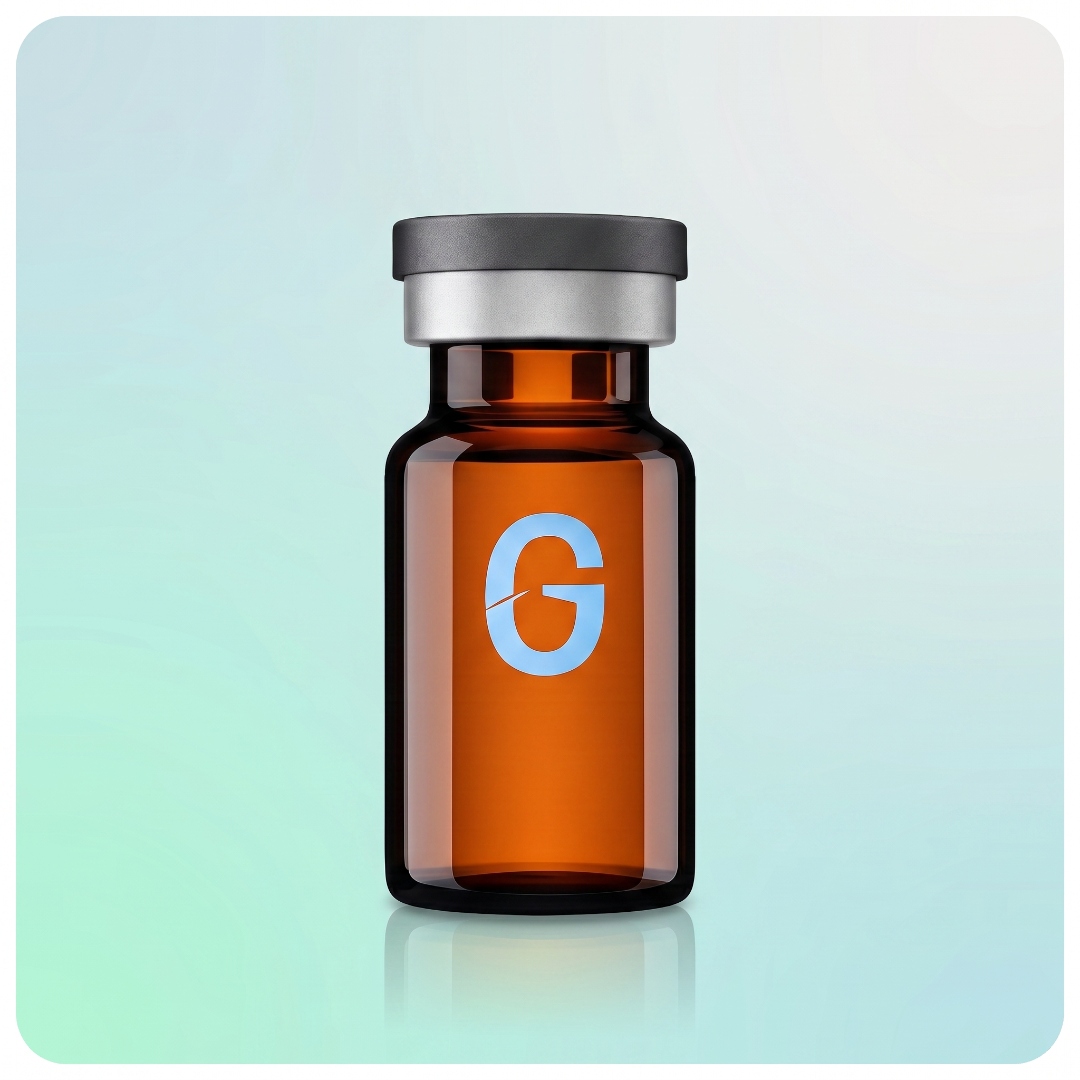
Sermorelin 15mg (2.5 mg/mL)
Sermorelin 15mg (2.5 mg/mL) is used in prescriber-directed longevity, peptide, antioxidant, or skin-longevity protocols. Published evidence varies substantially by ingredient, so the page avoids unsupported disease-treatment claims.
Sermorelin 15 mg, supplied at a concentration of 2.5 mg/mL (6 mL total volume), is a compounded multi-dose injectable preparation of the synthetic 29-amino acid growth hormone-releasing hormone (GHRH) analog. Sermorelin stimulates the pituitary gland's somatotroph cells to produce and secrete endogenous growth hormone (GH) in a physiologic pulsatile pattern. Unlike direct recombinant human GH (rhGH) administration, sermorelin preserves the hypothalamic-pituitary feedback axis, resulting in regulated, physiologic GH release. Genesis Compounding prepares this as a prescription-only 503A compounded preparation that is not FDA-approved in this indication.
| Active Ingredient | Pharmacologic Role |
|---|---|
| Sermorelin Acetate 2.5 mg/mL (15 mg total per vial) | Synthetic GHRH(1-29) analog that binds and activates pituitary GHRH receptors to stimulate endogenous growth hormone synthesis, transcription, and pulsatile secretion. |
Route: Subcutaneous injection.
- Using an insulin syringe, draw the prescribed volume (e.g., 0.1 mL = 250 mcg, 0.12 mL = 300 mcg) from the vial.
- Inject subcutaneously into the abdomen or thigh at bedtime to align with the natural nocturnal growth hormone surge.
- Rotate injection sites to prevent local tissue reactions.
- Inject at least 1 hour after the last meal on an empty stomach, as food (particularly carbohydrates and fats) and elevated blood glucose suppress pituitary GH release.
- A common protocol is 5 nights per week (Monday through Friday) with 2-day rest to prevent receptor desensitization.
- Dispose of needles in a sharps container after use.
All dosing is prescriber-directed. At 2.5 mg/mL concentration:
- Common daily doses: 200–500 mcg subcutaneously at bedtime (0.08–0.2 mL from this vial).
- A 15 mg vial at 2.5 mg/mL provides 6 mL, yielding approximately 30–75 doses depending on prescribed dose.
- Typical treatment cycles: 3–6 months with monitoring; some protocols use 5-days-on/2-days-off to minimize tachyphylaxis.
- Dose and frequency are titrated based on IGF-1 levels, clinical response, and tolerability.
- Sermorelin: As GRF(1-29)-NH2, sermorelin binds GHRH receptors on somatotroph cells of the anterior pituitary, activating adenylyl cyclase and increasing intracellular cAMP. Elevated cAMP stimulates GH gene transcription (pituitary GH mRNA production) and exocytosis of GH-containing secretory granules in pulsatile bursts. Critically, sermorelin preserves the negative feedback mechanisms of the GH axis: as endogenous GH rises, somatostatin is released from the hypothalamus, inhibiting further GH secretion and preventing supraphysiologic GH accumulation. This feedback preservation distinguishes sermorelin from direct rhGH administration, which can suppress the pituitary axis and cause sustained non-physiologic GH elevations.
Indication context: Sermorelin was previously FDA-approved for pediatric GH deficiency diagnosis and treatment (brand name Geref, discontinued by the manufacturer in 2008). It is now used off-label in adults for age-related GH decline, adult GH deficiency, and as an adjunct to GLP-1 therapy (to preserve muscle mass and lean body composition during weight loss). IGF-1 is the primary laboratory surrogate for GH secretory axis activity.
Monitoring:
- Serum IGF-1 at baseline and at 3-month intervals; target the mid-normal range for patient age and sex.
- Fasting insulin/glucose (GH can affect insulin sensitivity).
- Body composition (DEXA or clinical assessment) at 6-month intervals.
- Thyroid function: GH axis activation can unmask central hypothyroidism; check TSH at baseline and periodically.
- Cortisol: GH axis activation can unmask central adrenal insufficiency; screen if clinically indicated.
Contraindications:
- Active neoplastic disease or known sensitivity to sermorelin or any formulation excipient.
- Hypothyroidism, if untreated (GH response to sermorelin is blunted; treat thyroid deficiency first).
Warnings & Precautions:
- GH effects on insulin resistance: monitor glucose in pre-diabetic or diabetic patients; GH promotes insulin resistance.
- Pediatric use considerations do not apply to this indication; dosing differs significantly from adult off-label use.
- Sermorelin requires an intact hypothalamic-pituitary axis—it will not be effective in primary pituitary failure (e.g., panhypopituitarism from radiation or large pituitary tumors).
- Fluid retention, arthralgia, and myalgia may occur at higher GH levels from supraphysiologic sermorelin doses.
Drug Interactions:
- Glucocorticoids: inhibit GH response to sermorelin; minimize concurrent use where possible.
- Insulin: GH effects may increase insulin requirements; monitor blood glucose.
- Thyroid hormones: GH axis correction can alter thyroid hormone requirements.
Common Side Effects: Injection site reactions (pain, erythema, swelling), headache, flushing, dizziness, somnolence; with higher GH levels—fluid retention, arthralgias.
Store the lyophilized (or reconstituted) vial refrigerated (2–8°C). Do not freeze. Protect from light. Reconstituted solutions (if lyophilized) should be used within the beyond-use date assigned by Genesis Compounding. Keep out of reach of children. Do not shake the vial vigorously—swirl gently if mixing is needed.
How does sermorelin differ from growth hormone injections?
Sermorelin stimulates your own pituitary to produce growth hormone in natural pulsatile bursts, preserving the feedback loops (IGF-1, somatostatin) that prevent excess GH accumulation. Direct rhGH injections bypass the pituitary, suppress the GH axis, and can cause sustained non-physiologic GH levels. Sermorelin's pituitary-mediated mechanism reduces the risk of GH excess while supporting physiologic GH patterns.
Why inject at bedtime?
The majority of daily GH secretion occurs during the first phase of slow-wave sleep (approximately 1–2 hours after sleep onset). Sermorelin administered at bedtime on an empty stomach aligns with this natural nocturnal surge, producing higher GH peaks and better IGF-1 response than daytime dosing.
How long does treatment typically last?
Treatment cycles typically run 3–6 months, with IGF-1 monitoring at each assessment. Some patients continue longer with periodic breaks (2-days-off per week or longer cycle breaks) to prevent receptor desensitization. Your prescriber will determine duration based on your response and monitoring results.
Will sermorelin work if I have a pituitary problem?
Sermorelin requires functioning pituitary somatotroph cells. It will not be effective if pituitary GH-secreting capacity is severely impaired (e.g., from radiation, large tumor, or surgery). Prescribers should evaluate pituitary function before initiating therapy.
Is this FDA-approved?
Sermorelin (Geref) was previously FDA-approved for pediatric GH deficiency but is no longer commercially available. Adult use is off-label. This compounded preparation from Genesis Compounding is a patient-specific 503A product and is not FDA-approved as a compounded preparation.
Clinical References
Authoritative sources reviewed in preparing this clinical summary. Provided for prescriber reference; not a substitute for the prescriber’s clinical judgment.
Partner with Genesis Compounding
Join a PCAB-accredited 503A compounding pharmacy licensed in all 50 states. Complete onboarding in minutes and start prescribing personalized, compliant formulations for your patients.